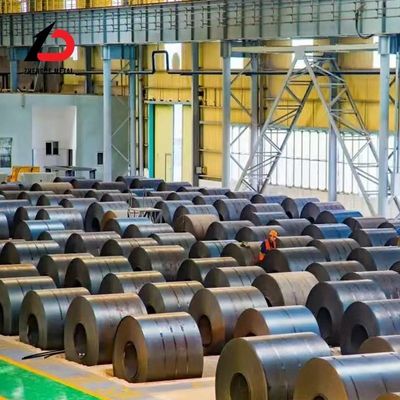


Q345B Q345B is the low alloy structural workhorse grade of Chinese industry, and in the 10 to 25 mm range it is what most heavy machinery builders cut their base plates, frames and brackets from. It delivers 345 MPa yield with impact toughness at room temperature, and it welds predictably with ER50 class consumables. Buyers who need a slightly tighter specification often ask for Q355B, which is the same grade under the newer GB/T 1591 designation.
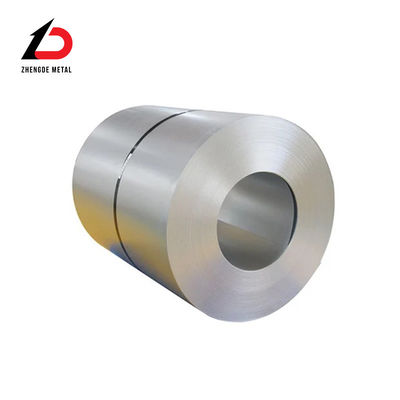
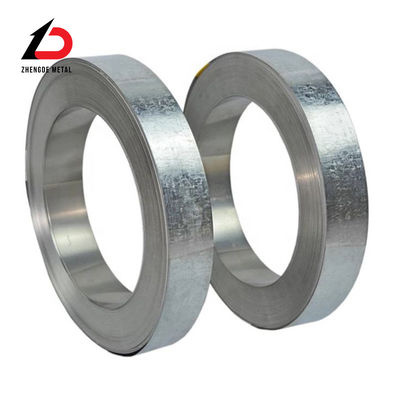
Every coil is rolled from continuously cast slab on a hot strip mill under a written rolling schedule, then cooled on the run out table and coiled at a controlled temperature. Before the coil leaves the line we check crown, wedge, camber and edge condition, because those four parameters decide how the material behaves on the customer's decoiler far more often than the tensile figure does. Coils are then sampled for chemistry and mechanical testing, and only the heats with results inside specification are released to packing.
Key Features| Parameter | Specification |
|---|---|
| Steel Grade | Q345B |
| Standard | GB/T 1591 |
| Thickness | 10.0-25.0 mm |
| Width | 1500-2500 mm |
| Coil Weight | 10-30 t per coil |
| Surface Condition | Hot rolled, normalized on request |
| Thickness Tolerance | Thickness ±0.30 mm |
| Yield Strength | 345 MPa min |
| Tensile Strength | 490-675 MPa |
| Elongation | 20% min |
| Delivery Condition | As rolled, pickled and oiled, annealed or normalized on request |
| Inspection | Mill test certificate, third party inspection available |
Machine tool bases, press frames, crane and excavator structures, injection moulding machine platens, wind turbine internals, mining equipment and general plant steelwork all use this grade. Because coil is decoiled and cut rather than supplied as plate, buyers gain the ability to nest parts across the full width and to order exactly the tonnage a job needs without a plate minimum. Normalized supply is available for parts that will be heavily machined after welding.
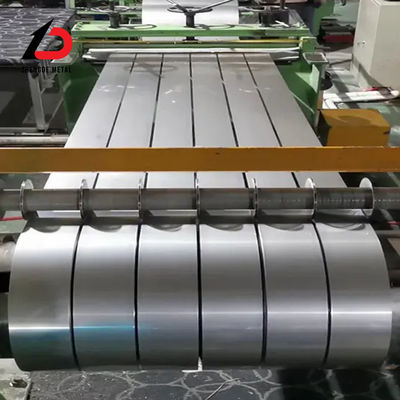
Because the coil is supplied rather than cut plate, buyers can nest parts across the full strip width, order only the tonnage a job requires and run the material straight onto an automated cutting or roll forming line. We quote slit to width as a standard option, and we confirm inner diameter, coil weight and winding direction against the customer's uncoiler before the order is rolled, so there is no adapter, no re-coiling and no scrap at the start of the run. Trial quantities of one coil are accepted for first orders, which lets a new customer verify formability and weld behaviour on their own equipment before committing to a full container.
Packaging and Quality AssuranceCoils are wrapped in waterproof plastic film, bound with at least four steel straps, edge protected with steel or plastic corner guards and, for export, loaded into 20 or 40 foot containers with timber dunnage that keeps the coil eye vertical and prevents shifting during ocean transit. Heavier coils are shipped on wooden saddles or in break bulk with lifting points marked. Each coil carries a weather resistant label showing grade, heat number, size, weight and coil number, and the packing list mirrors those labels so a receiving warehouse can reconcile without opening the wrap.
Every shipment is accompanied by a mill test certificate showing heat number, chemical composition, tensile results and, where the grade requires it, charpy impact energy. Third party inspection by SGS, BV, TUV or Intertek can be arranged at the mill before shipment, and we keep retained samples for twelve months so any question about a delivered coil can be answered against the actual test piece. Our quality system is certified to ISO 9001, and our documentation has been accepted by buyers in more than fifty countries. If a coil fails to meet the specification on arrival, we replace it or credit it, and we investigate the cause with the mill rather than leaving the customer to argue with a certificate.