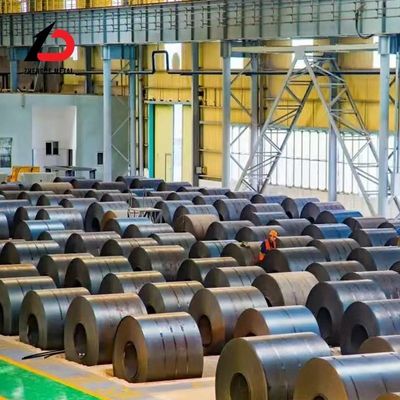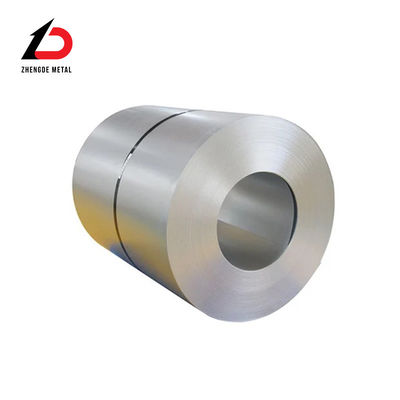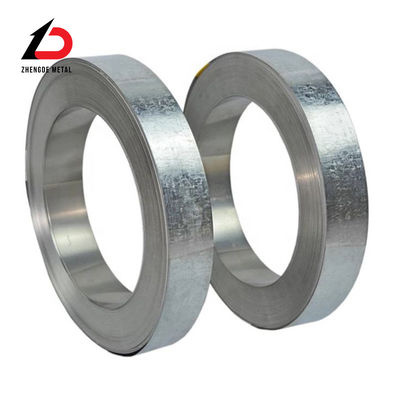


Q195 A tube mill lives or dies on the consistency of its incoming coil. Q195, and its near equivalent SPHC, gives the low yield strength and high elongation that let strip travel from the accumulator through the forming rolls and into the weld squeeze without edge wave or strip break. This grade is what most ERW pipe producers in Asia run for water pipe, scaffold tube, furniture tube and general structural tube in the 1.8 to 6 mm wall range.
Production starts with desulphurised continuously cast slab, heated in a walking beam furnace to a uniform temperature and rolled through roughing and finishing stands with interstand cooling. Thermo-mechanical control on the finishing train sets the grain size that later provides both strength and toughness. After coiling, each lot is sampled and tested for chemistry, tensile properties and, where the grade requires it, charpy impact energy. Results are attached to the coil number so that any downstream claim can be traced back to a single heat and a single rolling shift.
Key Features| Parameter | Specification |
|---|---|
| Steel Grade | Q195 |
| Standard | GB/T 700 / JIS G3131 SPHC |
| Thickness | 1.8-6.0 mm |
| Width | 300-1300 mm |
| Coil Weight | 3-20 t per coil |
| Surface Condition | Hot rolled, pickled on request |
| Thickness Tolerance | Thickness ±0.10 mm |
| Yield Strength | 195 MPa min |
| Tensile Strength | 315-430 MPa |
| Elongation | 33% min |
| Delivery Condition | As rolled, pickled and oiled, annealed or normalized on request |
| Inspection | Mill test certificate, third party inspection available |
ERW tube mills producing water and gas pipe, scaffold tube, furniture tube, bicycle tube, heat exchanger tube and general structural hollow sections are the main buyers. Coil weight and inner diameter are matched to the mill's accumulator and uncoiler before the order is rolled, and we supply mill edge, slit edge or pickled surface depending on whether the tube is to be galvanized after welding. Buyers taking multiple sizes usually consolidate into a single shipment so the mill can run a week's production from one lot with consistent chemistry.
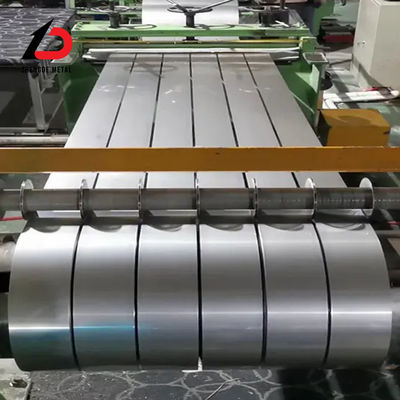
Because the coil is supplied rather than cut plate, buyers can nest parts across the full strip width, order only the tonnage a job requires and run the material straight onto an automated cutting or roll forming line. We quote slit to width as a standard option, and we confirm inner diameter, coil weight and winding direction against the customer's uncoiler before the order is rolled, so there is no adapter, no re-coiling and no scrap at the start of the run. Trial quantities of one coil are accepted for first orders, which lets a new customer verify formability and weld behaviour on their own equipment before committing to a full container.
Packaging and Quality AssuranceExport packing is agreed before production: standard sea worthy wrap, or reinforced packing with VCI film for long voyages to humid destinations. Steel strapping is applied with a tension that holds the wrap without crushing the coil edge, and every coil gets a lift point marked on the wrapper. Marking is stencilled in the language the buyer requests, and we photograph the loading pattern for each container so the customer can see exactly how the consignment was secured before the vessel sailed.
Every shipment is accompanied by a mill test certificate showing heat number, chemical composition, tensile results and, where the grade requires it, charpy impact energy. Third party inspection by SGS, BV, TUV or Intertek can be arranged at the mill before shipment, and we keep retained samples for twelve months so any question about a delivered coil can be answered against the actual test piece. Our quality system is certified to ISO 9001, and our documentation has been accepted by buyers in more than fifty countries. If a coil fails to meet the specification on arrival, we replace it or credit it, and we investigate the cause with the mill rather than leaving the customer to argue with a certificate.